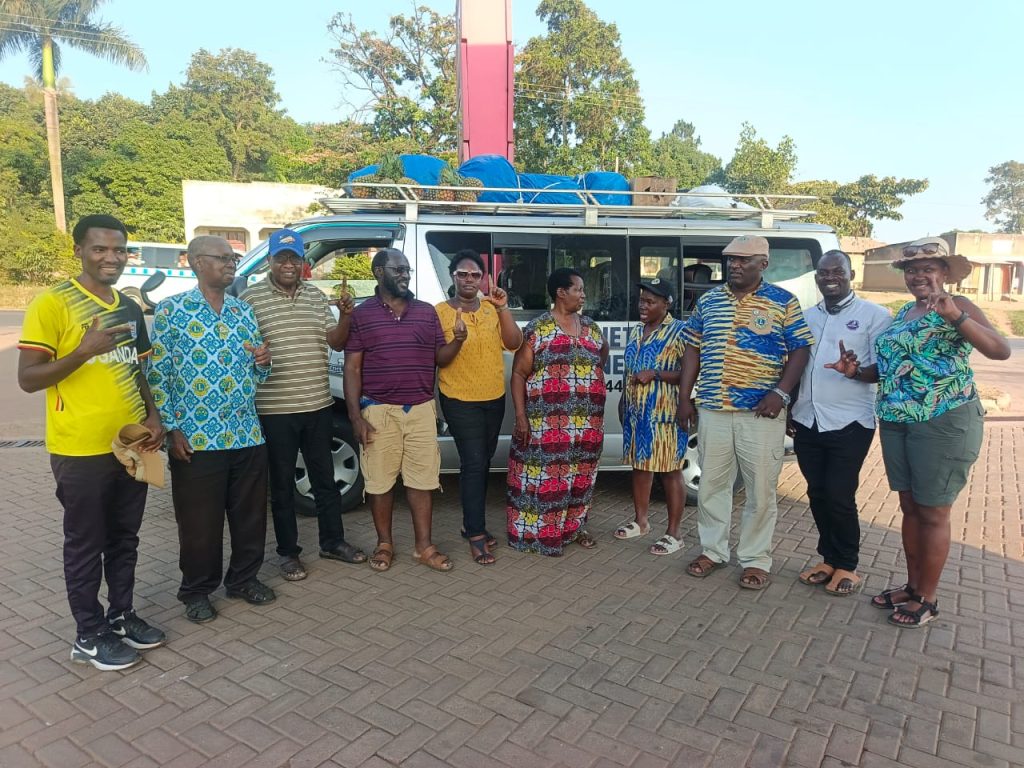
Mpigi District, located in the central region of Uganda, is predominantly rural, with communities widely distributed across villages, trading centres, islands and lakeside areas. Many residents depend on agriculture, fishing, small-scale businesses and other informal livelihoods. Limited household incomes, long distances to specialized health facilities and inadequate access to comprehensive eye care services made Mpigi an important district for The Seeing Eyes to extend its community-based eye care programme.
The outreach programme reached communities through health facilities, schools, churches, mosques, markets and community gathering points, bringing eye care services closer to people who would otherwise face difficulties accessing specialized care. Health facilities such as Mpigi Health Centre IV, Buwama Health Centre IV, Kammengo Health Centre IV, Mpigi Town Council Health Centre III, Muduuma Health Centre III and Nkozi Health Centre III provided important points for community mobilization, patient identification, treatment and referral.
Schools were a major entry point for reaching children and young people. The Seeing Eyes conducted vision screening in primary and secondary schools across the district, with particular emphasis on identifying refractive errors. Children with myopia, hypermetropia, astigmatism and other visual difficulties were identified and appropriately managed. Those requiring spectacles were provided with corrective glasses, helping them see the classroom board, read their books and participate more effectively in their education.
Churches and mosques were also used as strategic platforms for reaching adults and older people. Congregants were screened for common eye conditions, with particular attention given to presbyopia, which commonly affects people as they grow older. Reading spectacles were provided to beneficiaries who needed them, enabling them to read the Bible, Qur’an and other religious materials more comfortably and participate fully in worship.
The outreach further reached communities around Buwama, Kammengo, Mpigi Town, Muduuma, Nkozi and other rural and trading centres. Particular attention was given to underserved populations whose livelihoods and economic circumstances made it difficult to travel to distant hospitals for eye care. Common eye conditions, including eye allergies and infections, were treated on site where appropriate.
Patients with cataracts and other potentially sight-threatening conditions were identified and referred for further assessment and specialized management. Cataract patients requiring surgery were linked to appropriate surgical services, including referral through collaboration with Mulago National Referral Hospital where necessary. This referral pathway helped ensure that patients with conditions requiring specialized intervention could receive appropriate care beyond the outreach setting.
A significant component of the Mpigi outreach was intensive community health education. Communities were educated on proper eye and face hygiene, prevention of eye infections, early recognition of eye diseases and the importance of seeking professional eye care. Strong emphasis was placed on avoiding traditional eye medicines and unverified substances, which can cause serious damage to the eyes. Communities were also encouraged to avoid self-medication and seek appropriate medical attention whenever eye problems arise.
The impact of the Mpigi intervention was wide and significant. The programme reached children in schools, adults and older people through churches and mosques, and rural populations through community-based outreach. People who had struggled with poor vision received spectacles, patients with cataracts were identified and linked to surgical care, common infections and allergies were treated, and communities gained practical knowledge on preventing avoidable blindness.
The Mpigi experience demonstrated the importance of taking eye care services directly into communities rather than waiting for patients to travel to specialized facilities. By combining schools, health facilities, churches, mosques and community mobilization, The Seeing Eyes was able to identify eye problems early, provide appropriate treatment and vision correction, and establish referral pathways for conditions requiring specialized care.
Through the Mpigi outreach, The Seeing Eyes continued its mission of eliminating avoidable blindness by bringing quality, accessible and compassionate eye care to underserved communities. The programme helped ensure that more people could see clearly, learn effectively, work productively, worship comfortably and participate fully in family and community life.

